
Confluence
When a coach’s ideology meets with the right set of players, the results can be dynamite
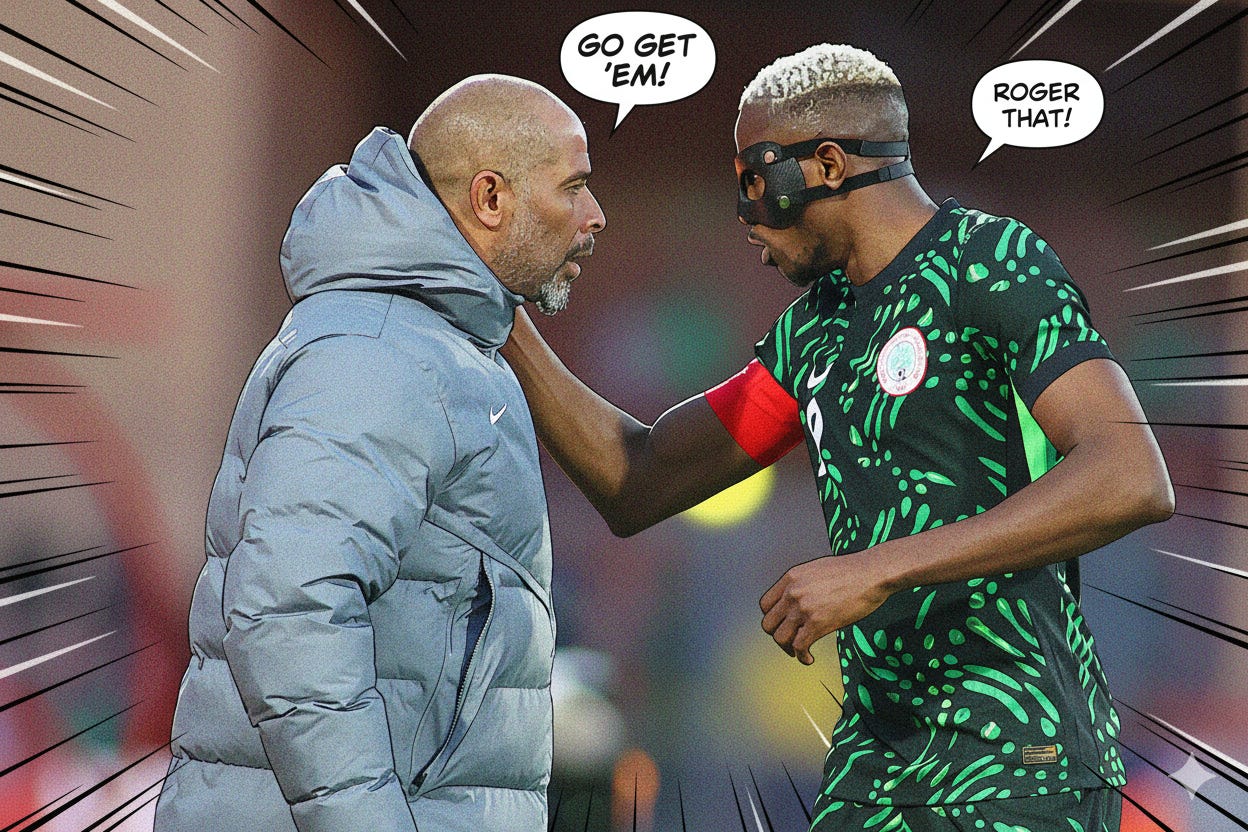
Eric Chelle may have been 47 when he took on the daunting task of salvaging Nigeria’s floundering 2026 World Cup qualifying campaign but, in many ways, he was still a coaching neophyte.
His claim to fame had been leading Mali, the nation he briefly represented as a player at international level, to the last eight at the 2023 Africa Cup of Nations (AFCON), but there was little else on his resume besides. Naturally, upon his appointment, eyebrows were raised, as were doubts. For the longest time, the idea of the ‘world-class coach’ has held Nigeria football in a sort of ideological bondage, one that completely ignored not just the economic reality of the country but also where international football sits in the pecking order as a product (particularly in contrast to club football): until fairly recently, it has not been the case that coaches of rising profiles have found national team jobs comely. As such, when Chelle was put forward, the announcement hit with a dull thud. No one quite knew what to expect.
The man himself, however, was remarkably clear in his own mind: he wanted movement, he wanted pressing, he wanted possession, and he wanted a midfield diamond.
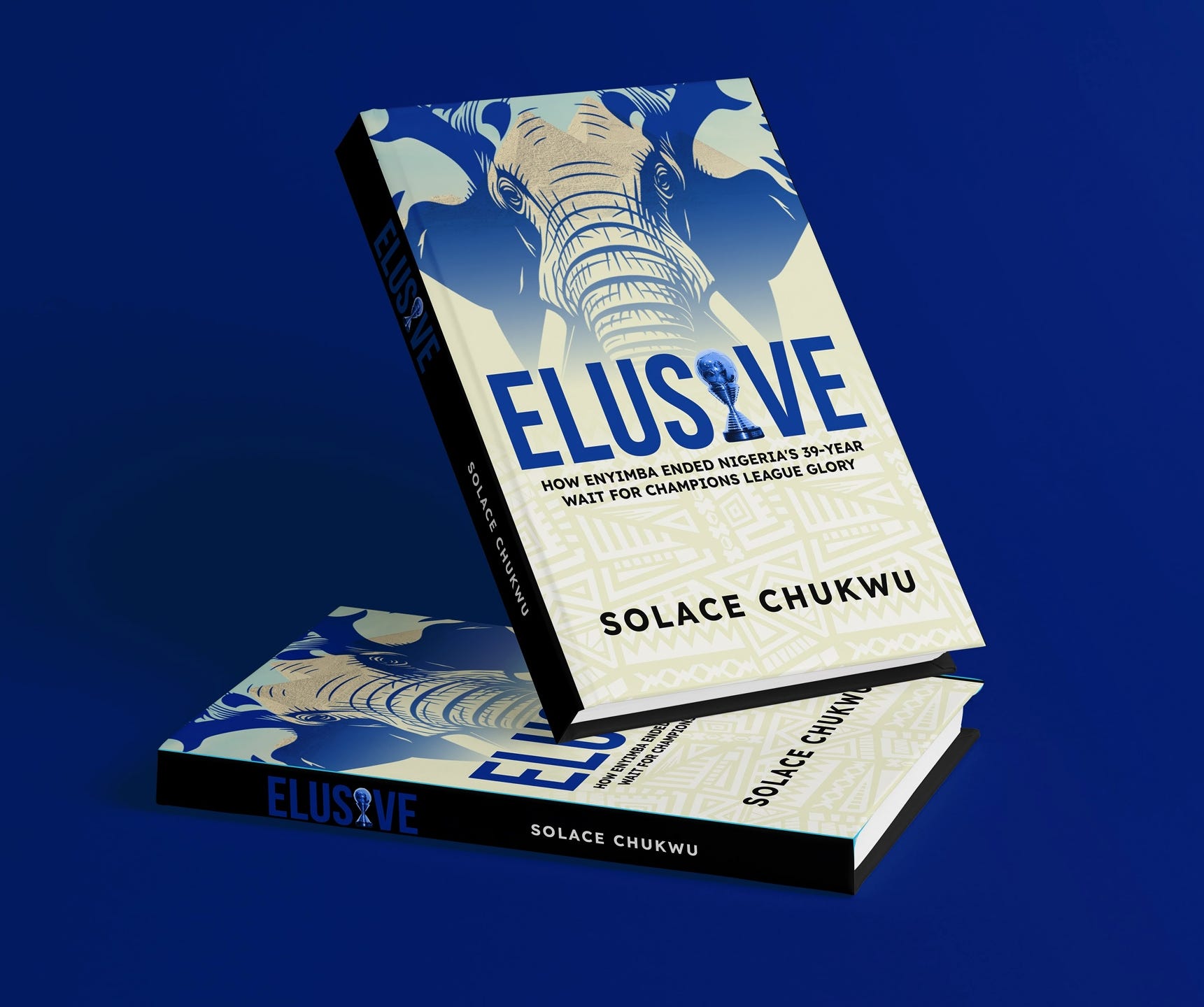
My new book Elusive: How Enyimba Ended Nigeria’s 39-year Wait for Champions League Glory is available for purchase in Nigeria. Order here.
While coaches have always had preferred systems, it is increasingly the case in the modern game that those preferences are not only rigid and unbending, but also enjoy hierarchical superiority over the personnel who are to animate it. This ‘football as chess’ outlook, inevitably, is void of a necessary human element, and all too often leads to disillusionment, with gifted players ostracised for not fitting into a coach’s tactical vision.
The idea, therefore, of a ‘system’ coach, especially within the context of international football where player pools are limited and there are no transfer windows, was a concerning one.
What made Chelle different, however, was that he was genuinely a fan of the Super Eagles. Declaring the famous 3-2 win over Spain at the 1998 World Cup as his moment of conversion was instructive: in a tournament that culminated in chaotic disappointment, he gravitated toward a performance that showcased the carefree, slightly naive exuberance with which Nigerian football captured hearts and minds in the 1990s. And perhaps it owed to the privation of attacking quality he suffered through with Mali, but he seemed to arrive in Abuja determined to lean into the glut of forward talent at his disposal with Nigeria.
A year on, and two matches away from winning the AFCON, it is safe to say the Franco-Malian has leaned hard, the dogs of war unleashed as, from the touchline, he cries ‘Havoc’ again and again. His reward – and that of millions of Super Eagles fans – has been some of the most sublime football a Nigeria national team has ever produced, the OLA front three interested, not in niceties, but only in loot and pillage. To describe it in words almost feels like a disservice; this team is a thing to be experienced, to be enjoyed not just with the eyes but with sharp intakes of breath and involuntary exhalations.
The journey to arrive at this point was far from smooth. The 4-3-1-2 – as one may notate the diamond for the sake of convenience – is a tricky shape to master, especially coupled with time pressures and the mandate of a World Cup spot hanging overhead. There have been mistakes: in profiling, in game management (vs Zimbabwe, March 2025), and even in choosing if/when to, briefly, turn away from the system (vs South Africa, September 2025). And yet, through it all, Chelle remained undefeated, getting results, by hook or crook, in a way his predecessors, blessed with the same riches, could not, probably because they were working against the true north of this group of players.
In doing so – seeking to leverage strength rather than minimise weakness – he made his own luck, and now that good fortune, allied to his first extended period of preparation, has metastasized into something else: a snarling, frothing creature that seemingly can neither be tamed nor contained.
The Igbo saying, ‘onye kwe, chi ya e kwe’ (when one agrees/says yes, his god does too) is not concerned necessarily with a verbal proclamation, but with a state of the mind, a harmony. It is a beautiful thing when a person’s proclivities align with their circumstances. Two years ago, the Super Eagles, held back by Jose Peseiro’s neurotic negativity, stumbled and sputtered to the final, flagging as they went, the very soul sucked out of them. This time around, let loose, the three-time African champions are going from strength to strength, undeniably peaking at the business end.
As it turns out, what it took was not so much a ‘world class coach’ as one hopelessly infatuated with his tools.
💯👏🏾💙